
P2X
Education and transferring Kopernikus knowledge
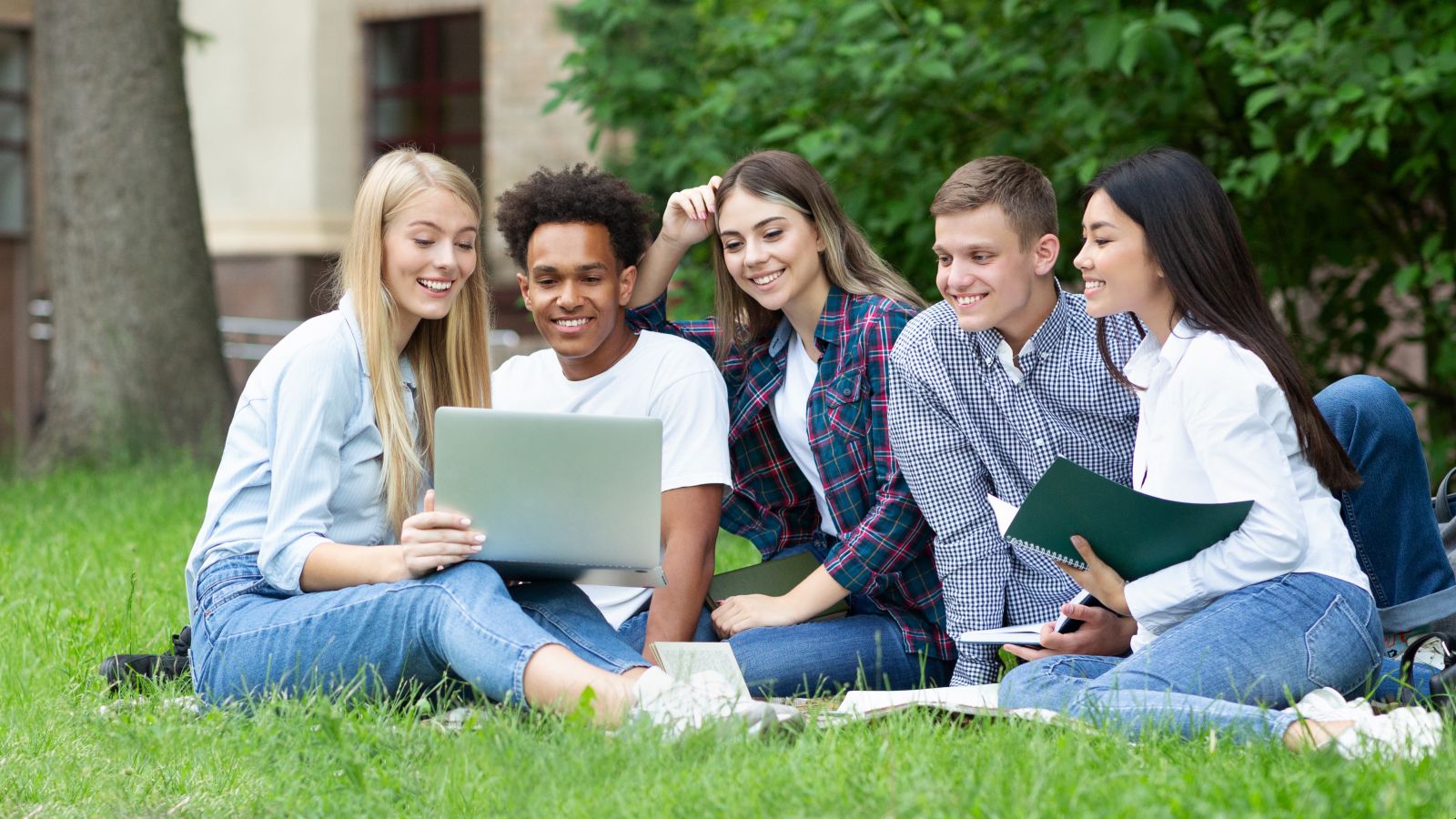
P2X is committed to capacity building. This means knowledge from today’s research will reach young aspiring scientists from tomorrow. Specifically, findings from P2X and its sister projects are to be made accessible to learners so that the most important insights can be widely recognized as a foundation in people's minds.
How long will it take until today‘s research becomes study material? Too long for the energy transition. The Kopernikus projects don't want to wait. Their declared aim is ultimately to push ahead with the energy transition. However, this is a highly complex task involving many different disciplines and stakeholders. Getting it right is a bit like asking strangers to completely rebuild a train whilst travelling at full speed and lay new tracks for it but without stopping. After all, the reliability of supply must be always guaranteed.

How does it affect the teaching materials? The train in question - the energy system - is in motion, but must change without coming to a standstill or derailing. This is why science and industry collaborate very closely at Kopernikus in order to keep the path from theory to practice short and at the same time to test how well the theory works in practice. Yet, the knowledge generated by research is initially only available to those who are involved. Rightly so, since the obtained results are new, volatile and need to be reviewed thoroughly. However, this is not enough for the Kopernikus projects, which is why capacity building plays a major role in the final project phase in the context of transfer. To ensure that in the near future, when the energy system gradually changes tracks, future specialists already know what they are dealing with, the Kopernikus project P2X is in charge of designing educational materials and programmes. Of course, knowledge from the sister projects is also incorporated in many places.
P2X Summer School: Looking back and ahead to 2026
Following previous runs in 2020, 2021 and 2022, the P2X Summer School 2025 took place for the fourth time. The multi-day intensive workshop provided participants with the opportunity to engage deeply with one of the key technologies of the energy transition: Power-to-X.
If you would like to learn more about how participants experienced the P2X Summer School, you can read a retrospective from their perspective here (in German).
The P2X Summer School will continue in 2026: from 17 to 20 September, WWF Germany, supported by DECHEMA e. V., will invite students to Leipzig. Under the title “Power-to-X: The Global Energy Transition and Regional Transformation”, participants will explore how current Power-to-X research connects with practical applications and questions of regional transformation. The programme includes discussions with experts from research, policy as well as practice, workshops, and excursions to industrial sites in Leuna and Bitterfeld.
The summer school is primarily aimed at students aged 18 and over in STEM fields such as chemistry, physics, process engineering, mechanical engineering or environmental engineering. Students from other disciplines, including the humanities and social sciences, may also apply if they have a relevant interest and prior knowledge.
Participation is free of charge; accommodation, meals, and programme activities are covered by the organizers. Participants will be selected by a jury based on their academic suitability and the application materials submitted.
The application deadline is 15 July 2026. Further details on the P2X Summer School 2026 and the application link are available in the German-language event announcement.
P2X Lecture Series: Two successful rounds finished
P2X partner Provadis organised the digital format of the ten-part P2X lecture series, which was offered in both 2024 and 2025, starting in the winter semester each year. The topics of the ten-part series were identical in both rounds, although the content was, of course, updated. In concrete terms, this means that developments in research over the course of a year reached participants almost immediately in this way, allowing them to follow developments directly.
The lecture series has now come to an end. Students who took part and still need or wish to obtain a certificate of attendance can find out directly from Provadis how this works. Any questions regarding this can be sent by email to: P2Xlectureseries@provadis-hochschule.de. PDF files of the respective presentations are also available there on request.
In the tabs below, interested persons will find links to the recordings of the P2X lecture series. The content from round two in the 2025/2026 winter semester is marked with (R2), and that from round one in the 2024/2025 winter semester with (R1).
Lecturers: Prof. Dr. Kirstin Hebenbrock, Prof. Dr. Peter Manshausen/both Provadis
Click here for the recording (Provadis YouTube channel). (R2)
Click here for the recording (Provadis YouTube channel). (R1)
Lecturer: Prof. Dr. Walter Leitner/MPI
Click here for the recording (Provadis YouTube channel). (R2)
Click here for the recording (Provadis YouTube channel). (R1)
Lecturer: Dr. Alexander Bauer/Forschungszentrum Jülich
Click here for the recording (Provadis YouTube channel). (R2)
Lecturer: Dr. Lambertus G.J. (Bert) de Haart/Forschungszentrum Jülich/RWTH Aachen
Click here for the recording (Provadis YouTube channel). (R1)
Lecturer: Prof. Dr. Ralf Ehret/Provadis
Click here for the recording (Provadis YouTube channel). (R2)
Click here for the recording (Provadis YouTube channel). (R1)
Lecturer: Prof. Alexander Mitsos/RWTH Aachen
Click here for the recording (Provadis YouTube channel). (R2)
Lecturer: Dr. Eike Kramer/RWTH Aachen
Click here for the recording (Provadis YouTube channel). (R1)
Lecturer: Frank Graf/DVGW-Ebi, Dorothea Müschenborn/Max Planck Institute for Chemical Energy Conversion; this session is a guest contribution of the Hydrogen Flagship Projects.
Click here for the recording (Provadis YouTube Channel). (R2 = R1)
Lecturer: Dr. Franz Bauer/OTH Regensburg und Michael Heberl/P2X
Click here for the recording (Provadis YouTube channel). (R2)
Lecturer: Prof. Dr. Sterner/OTH Regensburg
Click here for the recording (Provadis YouTube channel). (R1)
Lecturer: Ulrike Hinz/WWF, Heino von Meyer/PtX Hub
Click here for the recording (Provadis YouTube channel). (R2)
Lecturer: Ulrike Hinz/WWF, Heino von Meyer/PtX Hub, Veronica Vukasovic/GIZ PtX Hub Chile Uruguay
Click here for the recording (Provadis YouTube channel). (R1)
Lecturer: Dr. Peter Holtappels/KIT
Click here for the recording (Provadis YouTube channel). (R2)
Title: „Microreactors and organic electrosynthesis (M)“
Lecturer: Dr. Peter Holtappels/KIT
Click here for the recording (Provadis YouTube channel). (R1)
Lecturer: Jan Hildebrand/IZES
Click here for the recording (Provadis YouTube channel). (R2)
Lecturer: Irina Rau, Jan Hildebrand/ beide IZES
Click here for the recording (Provadis YouTube channel). (R1)
Further P2X educational content that is already available
Kopernikus partner WWF Germany has developed a virtual reality experience that playfully explains Power-to-X technologies and their use in a fictitious future. Interested players can explore the interactive game using VR goggles, but can also view the content online. Find out more (in German) here.
Kopernikus partner WWF has developed self-learning content for the P2X project on the topic of "Hydrogen for the energy transition and climate protection - Power-to-X". It is available free of charge in the WWF Academy. Click here to go directly to the e-learning programme (in German).